Where Does the Water Actually Go?
When a cloudburst dumps twenty millimeters of rain on a football stadium over forty-five minutes, that water represents hundreds of metric tonnes descending on an enclosed bowl. If that deluge cannot immediately drain away, it will saturate the turf rootzone, float loose seed and sand, flood the team dugouts, spill into lower player tunnels, and force an embarrassing match postponement broadcast across the globe.
A football ground is essentially a large civil drainage basin. Managing that volume is not just a case of having nice grass; it is a multi-tier engineering discipline involving subsurface lateral pipes, gravel bands, perimeter collection channels, silt interceptors, and high-capacity stormwater retention vaults.
The Anatomy of Subsurface Pitch Drainage
A high-performance sand-carpet or suspended-water-table stadium pitch utilizes a two-tier drainage matrix:
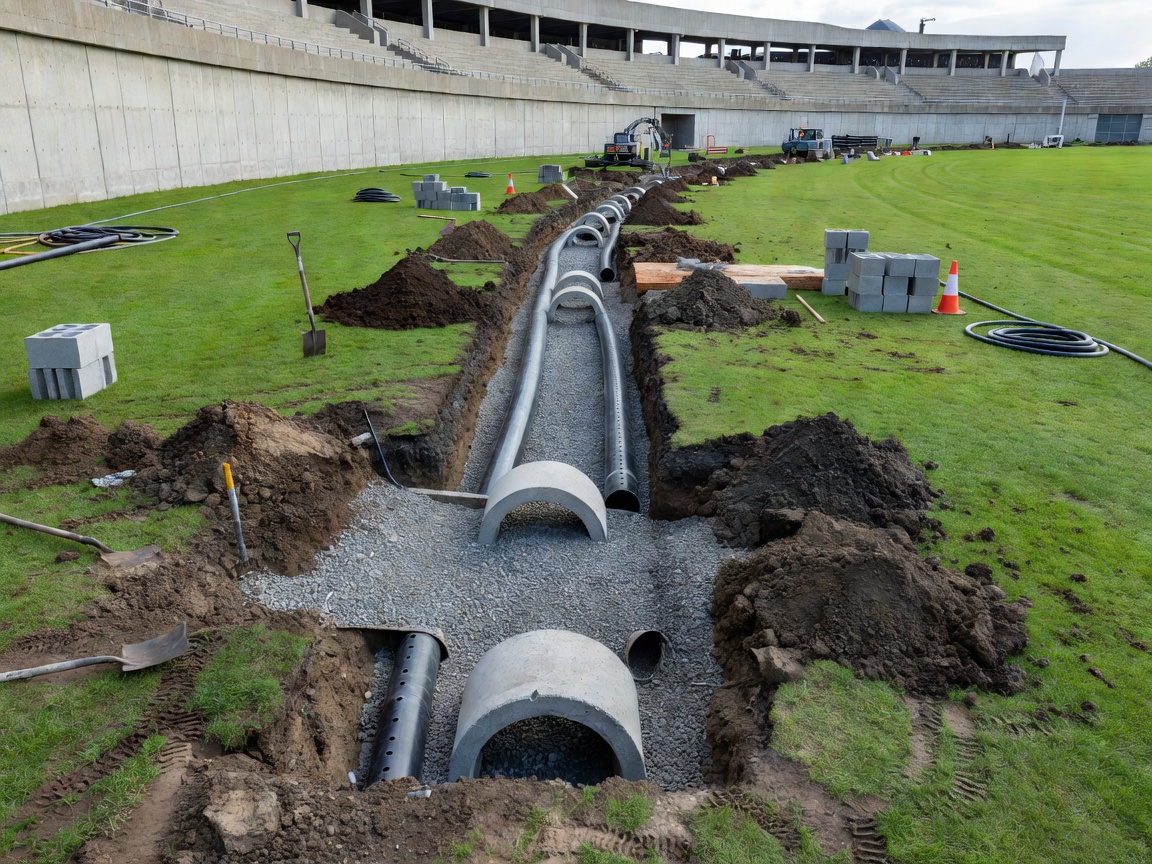
- Primary Drainage Grid: Perforated PVC or corrugated high-density polyethylene (HDPE) pipes laid at 5-meter or 3-meter lateral intervals, typically 400mm to 600mm beneath the surface. These pipe channels are backfilled with clean, washed 6mm-10mm pea gravel and topped with coarse grit. They tie into a heavy ring-main collector pipe that rings the perimeter pitch perimeter.
- Secondary Drainage (Sand Slits / Gravel Bands): Installed at 90-degree angles to the primary pipes. These narrow 20mm–50mm slits are cut across the surface at 250mm–500mm centers, packed with hard silica sand or micro-aggregate, physically bridging the surface rootzone straight down into the primary gravel beds.
The operational danger here is siltation. Over three to five seasons of organic root breakdown and windblown dust, the top of the sand slit "caps over" with fine organic sludge. When that occurs, even though the pipes below are completely bone-dry, water ponds helplessly on top of the pitch. Maintenance teams must deploy tractor-mounted vibro-sand-injectors or sand-banding implements during spring renovations to punch fresh sand channels down to re-establish hydraulic connection.
Comparing Drainage & Runoff Systems
| Infrastructure Zone | Primary Hydraulic Threat | Core Maintenance Routine | Typical Failure Consequence |
|---|---|---|---|
| Primary Lateral Pipes | Ochre (iron bacteria buildup) and root intrusion. | Annual high-pressure jetting via inspection rodding eyes. | Catastrophic whole-pitch saturation; slow winter drawdown. |
| Perimeter ACO Channels | Accumulation of turf cuttings, mud, and litter. | Bi-weekly grate lifting, vacuum silt extraction, pressure wash. | Water backs up from apron straight into synthetic technical areas. |
| Attenuation Tanks & Pumps | Float switch sticking, pump mechanical seal wear. | Quarterly float switch testing, pump amp draw monitoring. | Sub-pitch chamber fills up; backflow into vomitories. |
| Turnstile Aprons & Walkways | Sub-base subsidence under service vehicle axle weights. | Joint resealing, asphalt core checks, cross-fall grading review. | Ponding water at spectator entry gates creates severe slip risks. |
Silt Traps, Catch Basins, and Rodding Access
Out of sight, out of mind is the quickest route to stadium flooding. Every major pipe junction around the perimeter track should terminate in a concrete catch basin with a deep sump below the outlet pipe. As heavy water rushes off the pitch, coarse sand and rubber crumb settle to the bottom of the sump rather than traveling into the municipal storm sewer.
Ground teams must inspect these catch pits after every major storm event. If sumps fill up to the invert line, additional sand washes directly into downstream culverts, forming cemented blockages that cost tens of thousands of pounds to clear. A simple dip-pole check and vacuum extraction every quarter keeps the system flowing freely.
Perimeter Aprons, Walkways & Heavy Vehicle Loading
Football grounds do not only host footballers; they host 30-tonne outside broadcast (OB) trucks, emergency ambulances, mobile lighting rigs, and scissor lifts. The concrete and asphalt aprons ringing the pitch and spectator concourses must sustain these high wheel loads without cracking.
Maintenance priorities across ground infrastructure include:
- Cross-fall gradient preservation: Walkway slabs must sustain a strict 1:40 to 1:60 cross-fall directing rainwater away from turnstile gates and stadium doors into drainage gullies.
- Expansion joint caulking: Polyurethane joint mastics degrade under ultraviolet exposure and freeze-thaw cycles. When water penetrates these expansion cuts, winter frost heaves the slabs, creating trip hazards for arriving crowds.
- Permeable paving maintenance: Concourse areas featuring interlocking concrete block paving require periodic power-sweeping and joint replenishment with fine aggregate to maintain sustainable urban drainage (SUDs) permeability.
Need an assessment of your ground's hydraulic capacity?
We work with venue operations managers to inspect catch basins, review pump station redundancy, and restore secondary pitch drainage slit performance.
Connect With Infrastructure Engineers